The map is the market
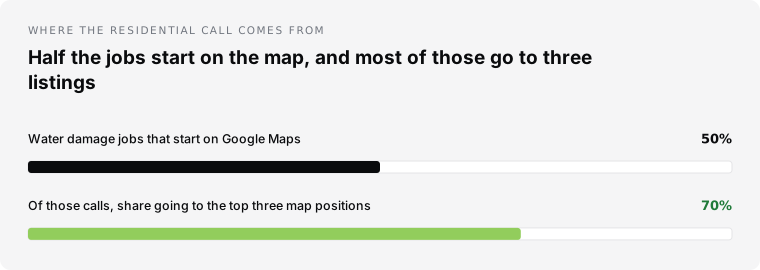
The video puts a number on it: about 50 percent of water damage jobs start from your position on Google Maps. People type "water damage near me," go straight to the map, scan photos and reviews, and call from there. They are not browsing websites. They are picking from a short list the way they pick a pizza place.
The list is shorter than it looks. Roughly 70 percent of calls go to the companies in the top three map positions. If you are not there, the work goes to whoever is, and the operators winning a shrinking claims market already know it. Your Local Services Ads are tied to the same signals, so a weak Google Business Profile drags down your paid placement too.
Roughly 70 percent of calls go to the companies in the top three map positions.
Reviews are the whole game
Run the test the video runs. Search your own service from a phone, find your listing, and ask honestly: would you call your company with 55 reviews when the competitor down the road has 400 or 500? The homeowner will not. Review count is the single most visible trust signal on the map, and most of the industry ignores it.
You do not need every review to come from a client. Character reviews count. A friend writing that you are dependable and show up on time sits next to a customer describing a basement pump-out. Bring in both, keep the volume coming at a steady weekly rate, and reply to every single one. Engagement tells Google you are active and doing work in the community.
Take the fire category. Take all of them.
Water damage restoration should be your primary category, fire damage second, building restoration third. The usual objection is "I don't do fire." The video's answer: when the fire department finishes dousing a house, it becomes a water loss. Take the category. Get the job.
Then finish the profile completely. Write the description with transactional language, your services, and your service area. Fill in hours, website, social profiles, and on-site services. Google uses depth and completeness to decide how confident it is that you do this work in this area, and that confidence is what the video calls prominence.
Your website is a catalyst, not a business card
The site's job is not to impress anyone. Nobody can name a restoration company off the top of their head, with the possible exception of Servpro, so branding and aesthetics are not what drives the phone. Three things matter: the site loads fast, it tells Google exactly what you do, and it is properly structured, down to the schema markup most agencies skip. That is what feeds the map listing.
From there the work is routine. Post updates, answer questions on the profile, upload photos, and keep replying to reviews. The video's claim is that doing all of this together produces an immediate increase in call volume, because every piece feeds the same ranking.