Count the re-keys on one job
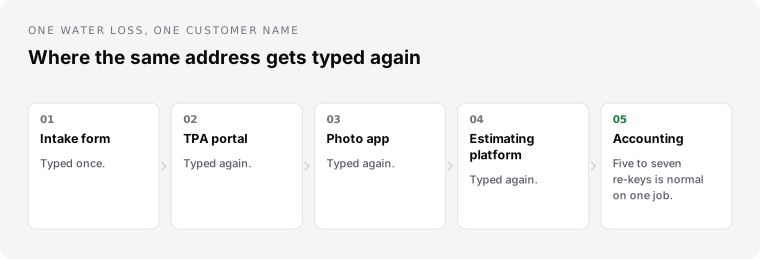
Take a single water loss and count how many times the customer's name and address get typed by a human. Intake form. TPA portal. Photo app. Estimating platform. Accounting. Sometimes a scheduling board and a whiteboard. Five to seven is normal, and each one is an opportunity for a mismatch that surfaces two weeks later as a phone call somebody has to make.
Then count the documents. The certificate of completion exists in email and maybe in the job folder. The signed authorization is a photo on someone's phone. The moisture log is in one system and the estimate that justifies it is in another. Nobody planned this; it accumulated one tool at a time, each of which solved a real problem.
Pick a spine, then decide what it owns
The goal is not fewer tools. The goal is one system that is authoritative, and everything else referencing it. Pick the spine — usually the job management system — and write down what only it is allowed to own: the job number, the customer and address, the job status, the assigned crew, and the index of documents.
Everything else can hold its own data as long as it carries the job number and does not get to disagree about status. The moment two systems can both independently claim to be the truth about whether a job is closed, you have created a reconciliation job and hired somebody to do it without ever writing the requisition.
Every system that can independently claim to be the truth is a reconciliation bill you pay in labor.
The integrations worth paying for
Rank every proposed integration by one question: does it eliminate a re-key or a manual upload? Photos landing in the job file automatically, the estimate going to the portal without a download-and-reupload, the approved invoice reaching accounting with the job number attached. Those pay for themselves in labor within a quarter and you can feel it.
An integration that merely displays the same data in a second place is worth close to nothing and frequently worse than nothing, because now you have two screens that can disagree and a staff that learns to check both. Dashboards are not integrations. If nobody stopped typing something, nothing was integrated.
Measure it, change one thing, measure again
Three numbers are enough to start. Days from job completion to invoice sent. Percentage of files that were document-complete on first upload. And a rough count of internal "where is the…" messages in a week, which is a genuinely good proxy for how much reconciliation your team is absorbing.
None of the three needs a reporting product. Job data and approved estimates both come out of the systems you already pay for as a spreadsheet, and a spreadsheet you filter yourself will answer these three questions this week rather than next quarter.
Get a baseline for a month. Change exactly one thing — one integration, one owner, one checklist. Measure the same three numbers the next month. This is slower than buying a platform and it is the only version that tells you whether the platform helped. Plenty of what gets sold as a product is a spreadsheet you can build in an afternoon; find out which category you are in before you sign.