
Start with what the number includes
A flooring price can look lower because it excludes installation, delivery, waste, tax, or preparation. Before calling the difference an underpayment, put the two figures on the same basis. Record the material specification and grade, quantity and unit, market and date, then list what each price includes. A lower total can come from a difference in the work listed as well as a unit-price difference.
Verisk’s published pricing methodology describes research using labor, material, equipment, contractor and customer sources. It also says published market prices may not fit a particular contractor, repair or structure. The earlier description of Xactimate as simply aggregated big-box retail prices was incomplete. Its published methodology is useful evidence, not a guarantee that a line item fits this job.

Read the actual ITEL product and report
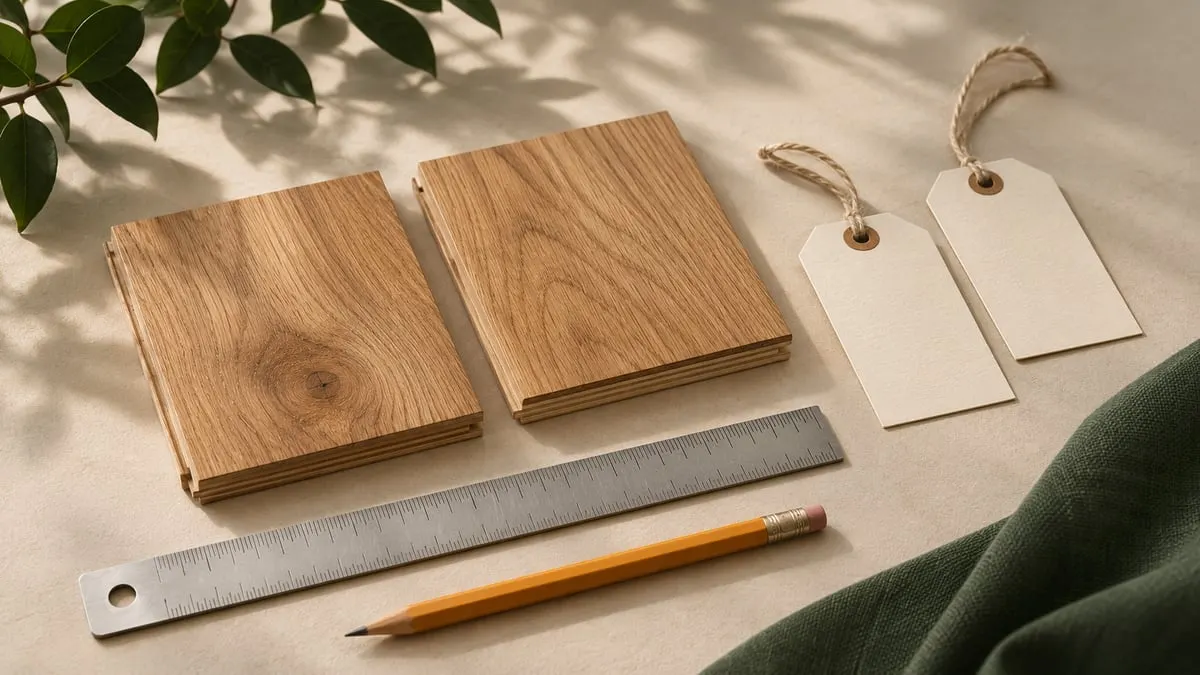
ITEL’s current flooring page distinguishes integrated benchmark pricing, photo-based submissions and physical samples. It describes Floor Surface Pricing as embedded in Xactimate, and offers a matching option for physical hardwood and laminate samples. Those are vendor descriptions; this article has not independently validated the database or its pricing accuracy.
That distinction matters. A generic benchmark and a sample-specific identification are different inputs. Ask which service produced the report and whether the quoted material can actually be purchased in the required quantity, delivered to the property, and installed under the documented conditions. Keep the supplier response with the estimate.
Ownership is a disclosure question, not a pricing test
Nearmap announced its ITEL acquisition in May 2025, with Thoma Bravo identified as the combined company’s lead strategic investor. The announcement is evidence of the disclosed transaction. It does not establish that a particular report is wrong or that prices were unlawfully coordinated.
The earlier article repeated a transaction value, allegations about incentives, and an analogy to unrelated litigation without the records needed to establish them. Those assertions have been removed. Evaluate the report’s method, commercial relationships and result separately. A concern about incentives is a reason to ask for evidence; it is not itself evidence of a defective match or price.
- 01Sample
Identify the actual material.
- 02Method
Ask how the price was produced.
- 03Evidence
Keep the supporting pricing with the file.
Build a correction another estimator can reproduce
Attach the original report, labeled sample photos, the exact product identification, dated supplier quotes, and a calculation showing the disputed component. If installation costs are missing, identify the work rather than adding a percentage to make the total look right. If availability is the issue, document the unavailable product and the proposed alternative.
Use estimate comparison to locate disagreements, then review each one against the job file. Software can organize the differences. It cannot establish coverage, a material match, or a local supplier’s inventory by itself.