Thermal finds the edge, not the water
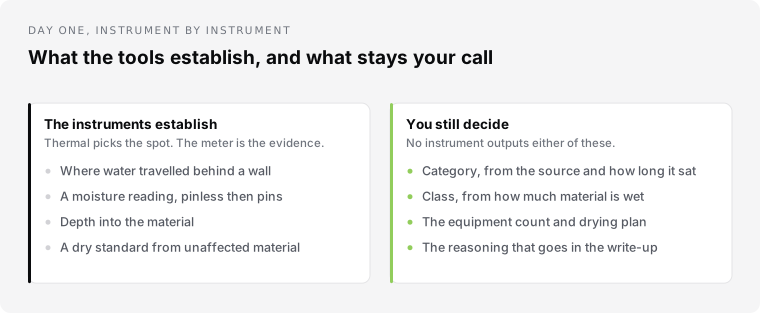
An infrared camera reads surface temperature. That is all it does. Wet material evaporates, evaporation cools the surface, and you see a cool patch with a defined edge. It is fast and it is genuinely useful for finding where the water traveled behind a wall you were not going to open on a hunch.
It also lies to you regularly. A sunlit exterior wall, a supply line, a stud behind drywall, a cold air return — all of them read as a temperature difference and none of them are water. I have watched people scope off a thermal image and open a wall that was bone dry. The camera picks the spot. It does not confirm anything.
The meter is the evidence
Pinless to scan an area quickly, pins to confirm and to get depth into the material. Then the part people skip: take a dry standard. Find the same material in an unaffected part of the structure and read it. Without that, your number is a number with no meaning — 18 on one species of hardwood is soaked and on another it is normal.
Photograph the reading with enough of the room in the frame that anyone can tell where it was taken. A close-up of a meter display against a blank white wall proves nothing six weeks later when somebody is questioning the file. Same shot, one step back, and it is documentation.
Without a dry standard, the reading is a number with no meaning.
Category and class are calls, not readings
No instrument outputs a category. Category comes from the source of the water and how long it has been sitting — a supply line this morning is not the same job as the same supply line four days ago in an unoccupied house in August. That is a judgment you make from what you find and what the customer tells you.
Class is about how much material is wet and how much water that material can hold, which is a room-by-room assessment, not a meter reading. Both of these end up driving your equipment count and your drying plan, and both of them have to be explained in the write-up. "Class 3" with no reasoning behind it is the line an adjuster pulls first.
Photograph the decision, not just the damage
The photos that get a file paid are the ones that show cause, extent, and the dry standard — not forty shots of the same wet carpet. Get the source. Get the affected area with something in frame for scale. Get the readings, affected and unaffected. Get what was behind the material once it came out.
This is also, not coincidentally, exactly what any photo-based estimating tool needs from you. Coverage of the room beats count of the photos every time, and a complete field file is what makes the estimate fast. Shoot it the way you would want to defend it, and the paperwork side takes care of itself.