The clean use case: extraction
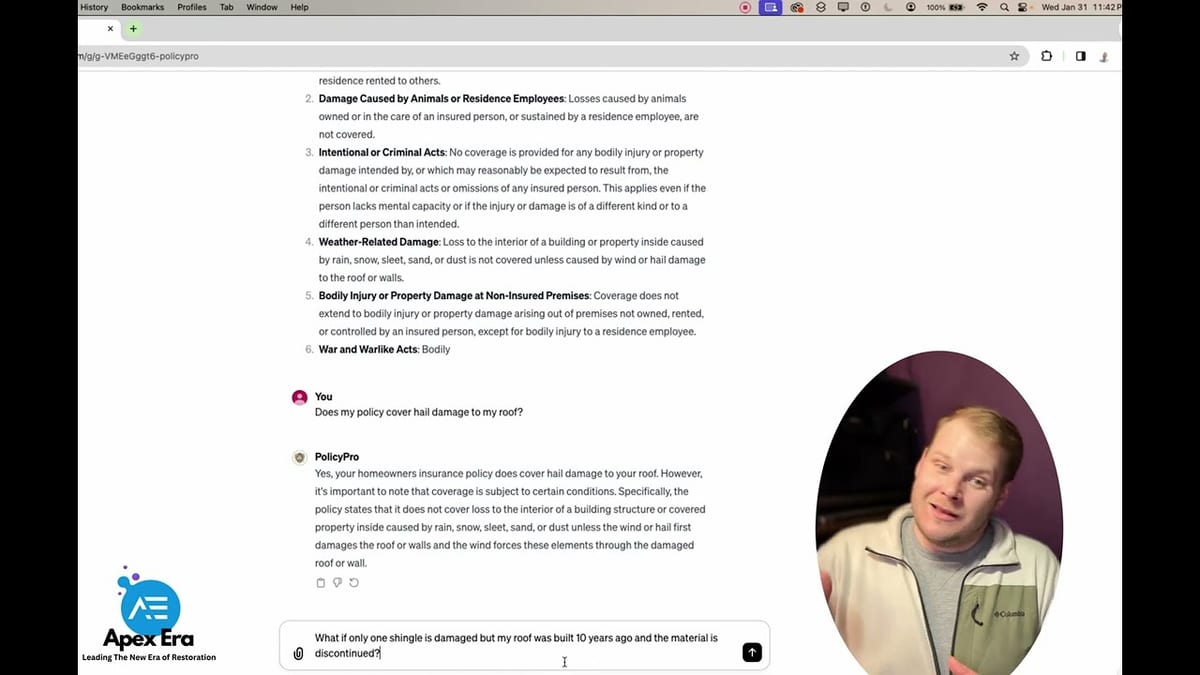
The demo in the video is simple: a sample Allstate policy loaded into ChatGPT 4, no custom system, no fine-tuning. Policies are long, and every claim starts with someone wading through one to find basic facts. Ask the model what exclusions exist in this policy and it pulls them out immediately.
That is extraction, not judgment. The document says what it says; the model is saving a public adjuster, an independent, or a carrier desk adjuster the time of finding it. The video's position is that this use is clearly ethical, and it is hard to argue otherwise. Faster access to what the policy actually contains helps every side of a claim.
The shaky middle: coverage questions
Then the questions get harder. Ask the model about a hail-damaged roof, is this covered, and something changes. It will answer, but now it is making a policy recommendation, and as the video puts it, ChatGPT is not licensed in Texas or Louisiana. The output looks the same on screen. The act is different: interpretation, delivered by something with no license, no accountability, and no stake.
Push one step deeper and it gets genuinely fraught. One damaged shingle, a ten-year-old roof, the material discontinued. Matching and reasonable-appearance disputes are hot-button issues that courts are still actively working through. An unlicensed, non-sentient system dispensing confident answers on them is exactly the scenario the video says the industry needs to talk about now.
Draw the line before the defaults draw it for you
The technology is already here, so the question is not whether it gets used on claims but which uses get guardrails. The distinction the video points toward is workable: let AI extract, organize, and locate what documents actually say, and keep coverage determinations with licensed, accountable humans.
That is the same line Axiom holds on the estimating side. The software reads the evidence and builds the structure of the estimate; it does not decide what a policy owes anyone, and the estimator reviews every code, quantity, and open question before an ESX leaves the building. Streamlining the mechanical work is the opportunity. Automating the judgment is the trap.
Streamlining the mechanical work is the opportunity. Automating the judgment is the trap.